How about having your own online storefront?
Kyte can help you!
Peptides
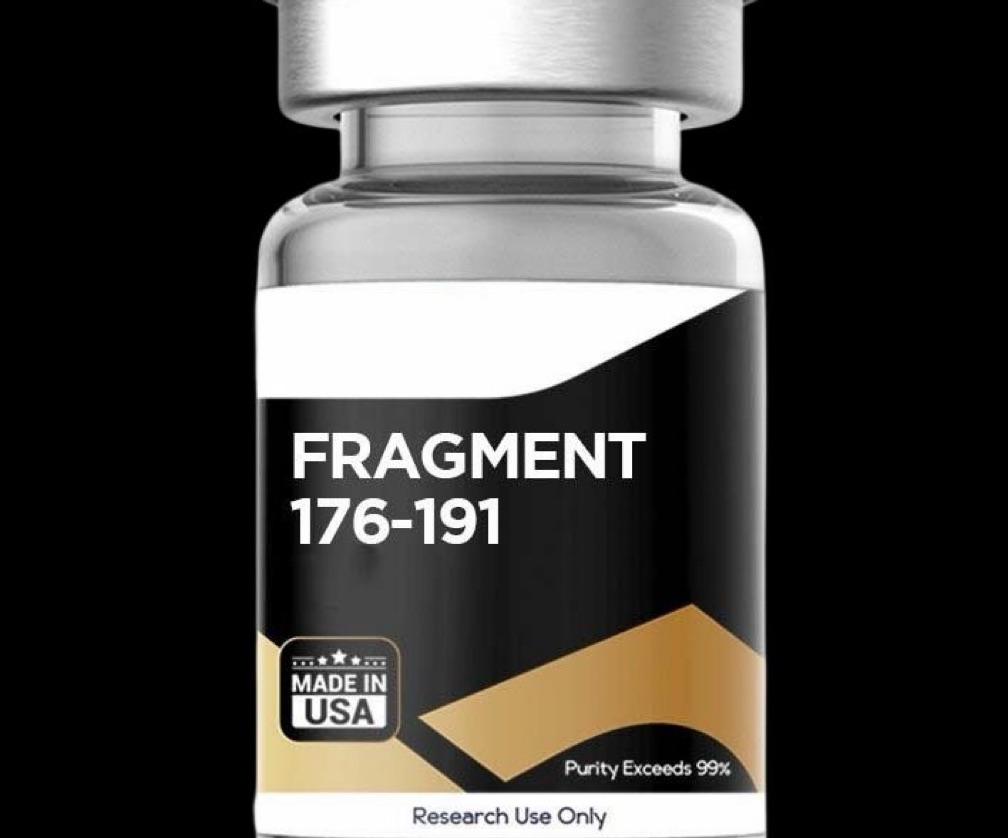
PEPTIDES Fragment 176-191 5mg
-5%
$40.00
$38.00
-5%
DESCRIPTION
Fragment 176–191 (AOD-9604) — Research Peptide Fragment 176–191 (also called hGH Fragment 176–191, tyr-hGH 177–191, or AOD-9604) is a 16-amino-acid sequence derived from the C-terminus of human growth hormone (hGH). Researchers consider it the “lipolytic fragment” of hGH, with the N-terminal tyrosine substitution (Tyr-) commonly used to enhance stability. All statements below refer to preclinical and exploratory findings in research settings. Overview Origin: 16-aa C-terminal segment of hGH; tyr substitution at the N-terminus for stability. Focus of study: lipid mobilization pathways and energy expenditure in research models. Stability notes: a native disulfide bridge present in hGH-derived fragments is thought to contribute to structural stability and resistance to degradation. Chemical Makeup Molecular Formula: C78H125N23O23S2 Molecular Weight: 1817.12 g/mol Also Known As: hGH Fragment 176–191; “lipolytic fragment” Research Highlights (Preclinical) Adipocyte & Metabolic Pathways In rodent and cell studies, Fragment 176–191 has been investigated for its potential to influence lipid metabolism. Some work reports up-regulation of β3-adrenergic receptor (β3-AR) RNA and downstream lipolytic signaling, alongside hypotheses involving increased energy expenditure and fat oxidation. Findings vary by model and protocol, and mechanisms remain under active investigation. Exploratory Human Trial Signal In the METAOD005 exploratory trial (12 weeks, multiple arms), one peptide arm reportedly showed a modest mean body-weight reduction and improvements in selected metabolic markers versus control. These data are preliminary and arm-specific; conclusions should be drawn cautiously pending replication and full peer-reviewed reporting. Cartilage & Joint Models In a collagenase-induced knee osteoarthritis model, Fragment 176–191 alone and in combination with hyaluronic acid was associated with improved gross and histopathology scores versus saline; the combination arm performed best within that model. These results are model-specific and not necessarily generalizable. Glycogen/Glucose Readouts In normal murine models given synthetic hGH peptides (including Fragment 176–191), researchers observed small increases in blood glucose and lactate, with shifts in glycogen-synthase activation ratios across muscle, adipose, and liver—suggesting modulation of carbohydrate metabolism pathways in those settings. Key Specifications Form: Lyophilized powder Typical Purity: ≥99% (HPLC), COA available per lot Packaging: Research-grade; sealed vial Storage & Handling Store lyophilized powder in a cool, dry place. After reconstitution: refrigerate at 2–8 °C. For long-term stability: store at −20 °C; avoid repeated freeze–thaw cycles. Compliance Notice For laboratory research use only. Not for human or veterinary use. No medical claims are made; all descriptions refer to in vitro/in vivo research contexts.
Peptides
PEPTIDES Fragment 176-191 5mg
$40.00
$38.00